
Fixed Index Annuities — Guaranteed Growth Without Market Risk

Trever Dahms • 22 May 2026

Worried about outliving your retirement savings?

If you're approaching retirement — or already there — you've probably wrestled with a core dilemma: how do you grow your savings without risking losing them in a market downturn?

Fixed Index Annuities (FIAs) are one solution designed specifically for that challenge. This guide explains how they work, who they're right for, and what to compare when shopping for one.

What Is a Fixed Index Annuity?

A Fixed Index Annuity is a contract between you and an insurance company. You deposit a lump sum (or series of payments), and the insurer credits interest based on the performance of a market index — like the S&P 500 or a blended index.

The two key features:

— Your principal is protected — you cannot lose your original deposit due to market performance

— Your growth is linked to an index — when the market rises, you earn a portion of those gains

How Are FIA Returns Calculated?

Your actual return depends on how the policy is structured. Common crediting methods include:

— Annual Point-to-Point: Compares the index value at the start and end of each year. Simple and transparent.

— Monthly Average: Averages the monthly index values over the year. Can smooth volatility.

— Participation Rate: You earn a set percentage of the index gain (e.g., 80% of S&P gains).

— Cap Rate: Your gain is capped at a maximum (e.g., 10%), even if the index earned more.

— Floor: The minimum you can earn is usually 0–2%, even in a down market.

Understanding these mechanics is critical — they vary significantly by carrier and product.

How Can FIAs Generate Lifetime Income?

Many FIAs include an optional income rider that provides guaranteed lifetime income payments — similar to a pension.

With an income rider:

— Your "income value" grows at a guaranteed rate (often 5–8% per year)

— At a future date, you can "turn on" income payments for life

— The payments continue even if your account value runs to zero

This addresses one of the biggest retirement fears: outliving your money.

Who Is a Good Candidate for an FIA?

FIAs are well-suited for:

— Retirees or pre-retirees (typically 55–75) who want protected growth

— People who've "won the game" and want to preserve savings more than maximize returns

— Those looking for a predictable income stream in retirement

— Individuals who've lost money in market downturns and want downside protection

FIAs are generally not ideal for money you might need in the short term (most have surrender periods of 5–10 years), or aggressive investors comfortable with market risk seeking maximum growth.

How TD Coverage Can Help

Trever Dahms at TD Coverage works with multiple top-rated FIA carriers and can compare products, crediting strategies, income riders, and fees side-by-side.

There's no cost for a consultation.

Call: (262) 352-3997

Visit: tdcoverage.com

Clearwater, FL


by Trever Dahms 14 August 2026
Medicare Covers a Lot. It Doesn't Cover Everything.
by Trever Dahms 10 August 2026
A Small Policy That Solves a Big Problem
by Trever Dahms 3 August 2026
Two Different Tools for Two Different Goals Clients often come to me asking about annuities without knowing there are different types built for different purposes. Two of the most common are Multi-Year Guaranteed Annuities, or MYGAs, and Fixed Index Annuities, or FIAs. They're both about protecting principal, but they work differently.
by Trever Dahms 29 July 2026
The Question I Wish More People Asked Earlier Most people don't think about long term care planning until they're already in the middle of a crisis, whether that's a parent's diagnosis or their own health scare. By that point, some of the best options are already off the table. So when should you actually start thinking about this?
by Trever Dahms 22 July 2026
Missed Medicare's Annual Enrollment Period? A Special Enrollment Period may still let you change plans. Here's what qualifies and how it works.
by Trever Dahms 21 July 2026
Medicare is one of the most important financial decisions you’ll make in retirement. It’s also one of the easiest to get wrong — not because people aren’t paying attention, but because the rules are genuinely complicated and the consequences of certain mistakes are permanent.
by Trever Dahms 17 July 2026
For retirees and pre-retirees, few things are more unsettling than watching the stock market drop 20, 30, or even 40 percent. When you’re drawing income from your savings, a major market decline early in retirement can permanently damage your financial plan — a phenomenon called sequence-of-returns risk. Fixed Index Annuities (FIAs) are designed specifically to address this risk.
by Trever Dahms 13 July 2026
If you’ve looked into long-term care insurance and ultimately decided against it, there’s a good chance the reason came down to one objection: “What if I pay premiums for 20 years and never need care? I’ll have wasted all that money.” Hybrid life/LTC policies were created to solve exactly this problem.
by Trever Dahms 10 July 2026
If there’s one part of Medicare that consistently confuses people more than any other, it’s drug coverage. The rules are layered, the terminology is specific, and the cost differences between plans can be significant — sometimes hundreds of dollars a year for the exact same medications.
by Trever Dahms 8 July 2026
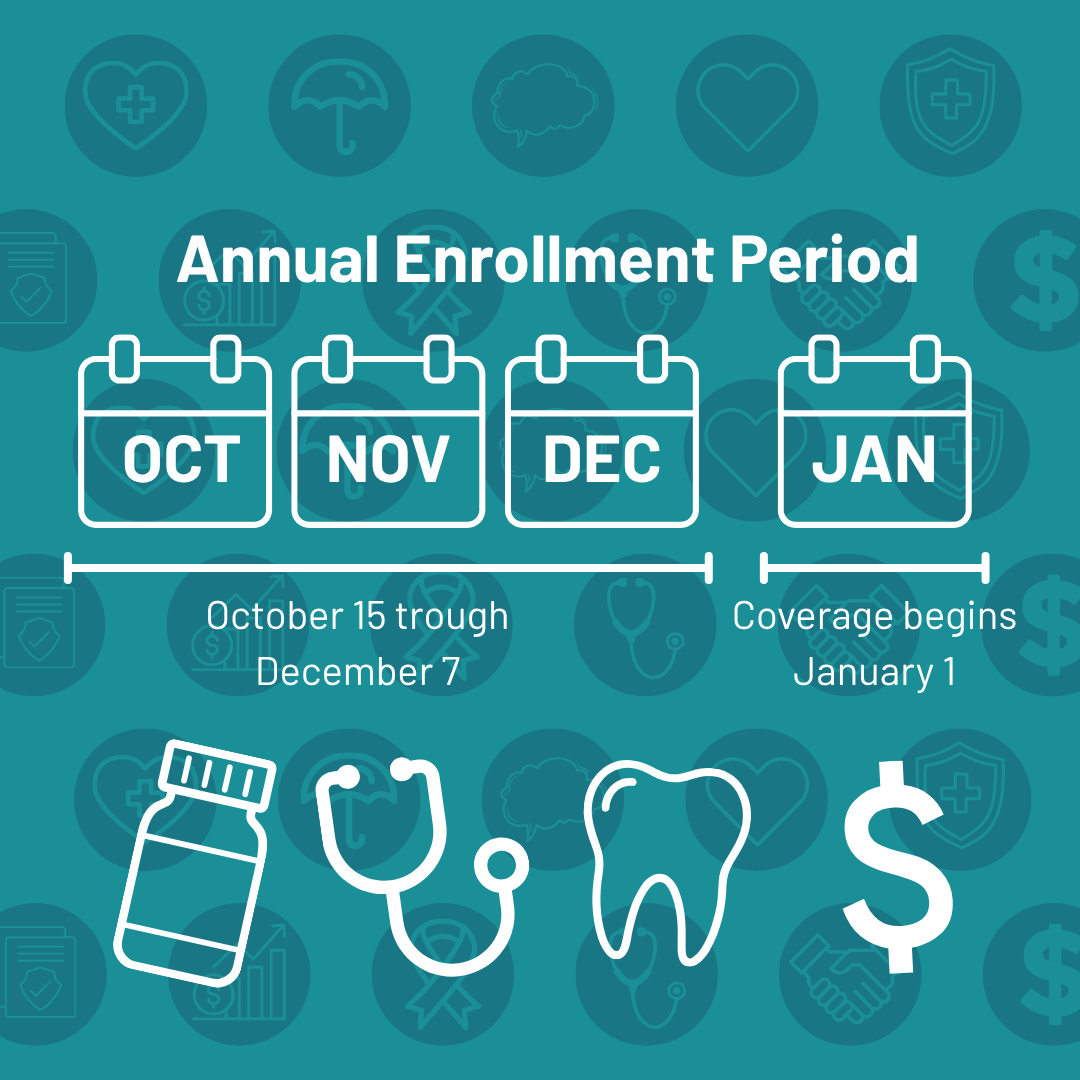
Every year from October 15 to December 7, Medicare beneficiaries have the opportunity to make changes to their coverage for the upcoming year. This period — officially called the Annual Enrollment Period (AEP) or Open Enrollment Period — is one of the most important windows in the Medicare calendar.  If you miss it without a qualifying Special Enrollment Period, you're generally locked into your current plan until the next AEP.