

Dental and Vision Insurance: Worth It Outside a Group Plan?
Trever Dahms • 15 June 2026
If you've ever had a job with benefits, you probably had dental and vision coverage tucked into your group plan and barely thought about it. Then you retire, go self-employed, or join a smaller company without benefits — and suddenly you're staring at standalone policies wondering whether they're worth the monthly premium.
The short answer: it depends on how you use it. The longer answer is worth a few minutes.
What dental insurance actually covers
Most standalone dental plans break coverage into three buckets. Preventive care (cleanings, exams, X-rays) is typically covered at 100%, often with no deductible. Basic services (fillings, simple extractions, root canals) are typically 70 to 80% covered after a small deductible. Major work (crowns, bridges, dentures, oral surgery) is typically 50% after the deductible.
Most plans have an annual maximum — the total they'll pay out in a year — usually somewhere between $1,000 and $2,500. That cap is the single most important number on the policy.
Doing the math
Add up what you're likely to spend on dental care in a year. For most adults, that's two cleanings ($150–$250 each in Florida), an exam, and X-rays — call it $400 to $600 if you go to a regular dentist out-of-pocket.
Now compare that to the annual cost of a plan: premiums of $25 to $50 a month ($300–$600/year), plus any deductible and your share of any procedures.
For someone who only gets cleanings, a plan often roughly breaks even. The math swings strongly in favor of insurance the moment something goes wrong — a single crown can run $1,200 to $2,000, and a root canal another $1,000 to $1,500. That's where the policy earns its keep.
Vision insurance: simpler math
Vision plans are more predictable. A typical policy covers an annual eye exam (often a $0 copay), an allowance toward frames every 12 or 24 months, lenses (single vision, bifocal, or progressive) at a copay, and discounts on contact lenses or LASIK.
At $10–$20 per month, vision plans tend to pay off if you wear glasses or contacts and update them regularly. If you have 20/20 vision and don't expect that to change, you might be better off paying out of pocket for an annual exam and skipping the premium.
Two big watch-outs
First, waiting periods. Many dental plans make you wait 6 to 12 months before they'll cover major work. If you know you need a crown next month, the new policy probably won't pay for it. Read the waiting period schedule before you sign up.
Second, annual maximums. If you're facing a major dental situation (implants, full mouth rehab), even a "good" plan will hit its annual cap fast and you'll be paying the rest out of pocket. In some cases, paying cash and negotiating with the dentist is competitive.
If you're on Medicare
Original Medicare (Parts A and B) does not cover routine dental, vision, or hearing care. Many Medicare Advantage plans bundle these benefits in, often with annual allowances for glasses or dental work. If those services matter to you, that's worth weighing when you compare an Advantage plan against a Medigap policy (which doesn't include them).
What about discount plans?
Discount dental plans aren't insurance — they're networks of providers offering reduced rates to members for a monthly fee. They're often cheaper than insurance and have no waiting periods, but you still pay the discounted rate out of pocket. For someone who needs a lot of work and can't get traditional insurance, they can be a reasonable option.
The bottom line
Standalone dental and vision insurance makes the most sense when you expect to need cleanings plus occasional restorative work, you wear glasses or contacts and replace them regularly, or you're risk-averse and prefer predictable monthly costs over the chance of a $2,000 surprise. It makes less sense when you have great teeth, perfect eyes, and a healthy emergency fund.
If you want help comparing standalone dental and vision policies — or seeing how they stack up against the dental/vision benefits inside a Medicare Advantage plan — that's exactly what I do. Call Trever at (727) 314-3114 for a free comparison.
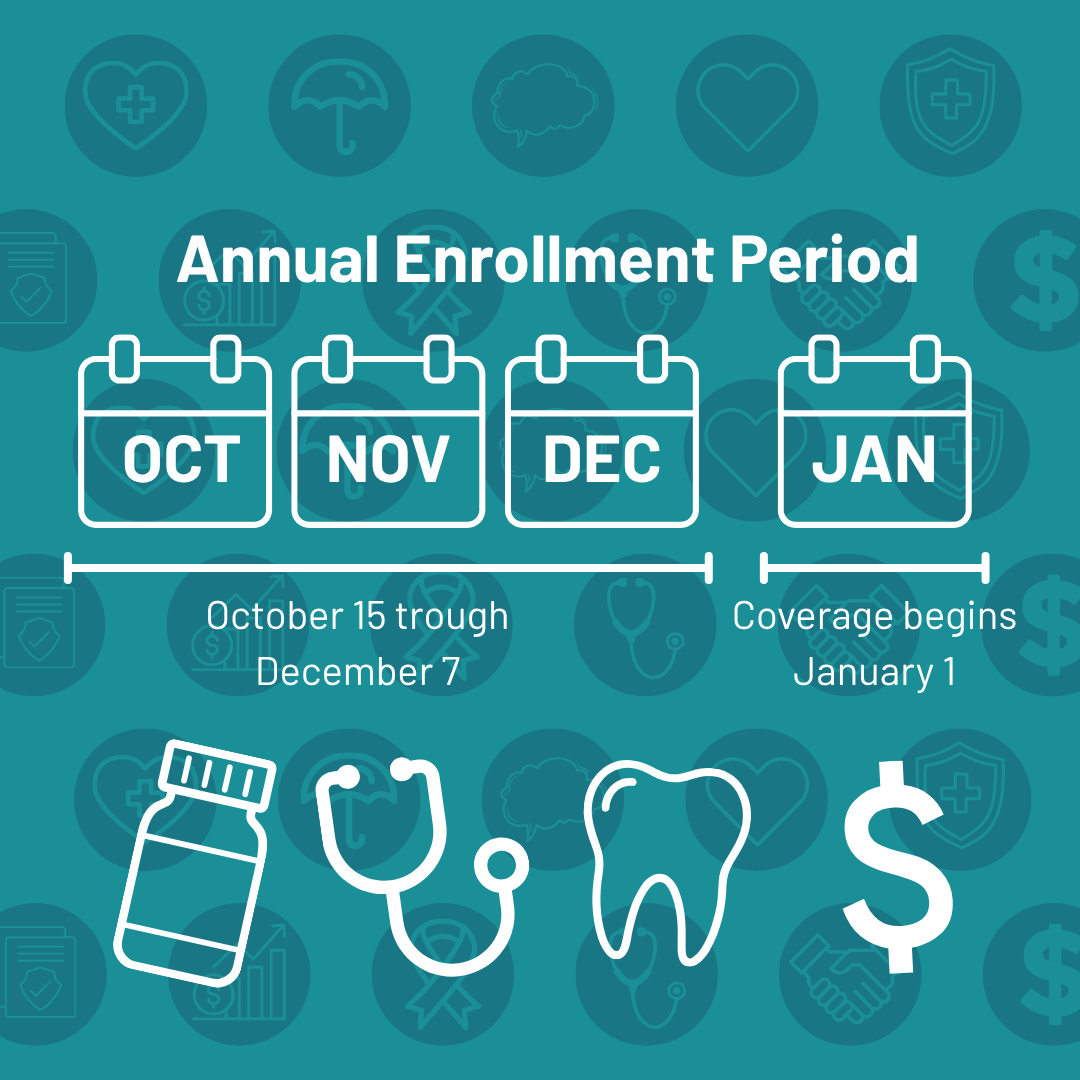
I think about all the people out there running the exact same Medicare Advantage plan they picked six or seven years ago, never once checking if it's still any good, kind of like people who still use the ringtone their phone came with because changing it never occurred to them. It was fine once. That doesn't mean it's still fine now. The Annual Enrollment Period (October 15 through December 7) is your one shot a year to actually do something about it. Here are five signs worth paying attention to.
Okay so every October the same thing happens. Your mailbox turns into a warzone of postcards, all claiming to be the best plan, none of them actually explaining the rules of the game you're supposedly playing. It's like getting twelve different group texts about a party and nobody mentions the address. You're just standing there thinking, "Do I need to actually DO something here, or is this just insurance companies being insurance companies?

Medicare Covers a Lot. It Doesn't Cover Everything.

A Small Policy That Solves a Big Problem

Two Different Tools for Two Different Goals Clients often come to me asking about annuities without knowing there are different types built for different purposes. Two of the most common are Multi-Year Guaranteed Annuities, or MYGAs, and Fixed Index Annuities, or FIAs. They're both about protecting principal, but they work differently.

The Question I Wish More People Asked Earlier Most people don't think about long term care planning until they're already in the middle of a crisis, whether that's a parent's diagnosis or their own health scare. By that point, some of the best options are already off the table. So when should you actually start thinking about this?

Missed Medicare's Annual Enrollment Period? A Special Enrollment Period may still let you change plans. Here's what qualifies and how it works.

Medicare is one of the most important financial decisions you’ll make in retirement. It’s also one of the easiest to get wrong — not because people aren’t paying attention, but because the rules are genuinely complicated and the consequences of certain mistakes are permanent.

For retirees and pre-retirees, few things are more unsettling than watching the stock market drop 20, 30, or even 40 percent. When you’re drawing income from your savings, a major market decline early in retirement can permanently damage your financial plan — a phenomenon called sequence-of-returns risk. Fixed Index Annuities (FIAs) are designed specifically to address this risk.

If you’ve looked into long-term care insurance and ultimately decided against it, there’s a good chance the reason came down to one objection: “What if I pay premiums for 20 years and never need care? I’ll have wasted all that money.” Hybrid life/LTC policies were created to solve exactly this problem.